We had a two day event this weekend. The bad part was that there was rain both days. Not much good for testing. However, both days I got one or two runs with substantially dry sections where I could get a feel for the high lat-G behavior.
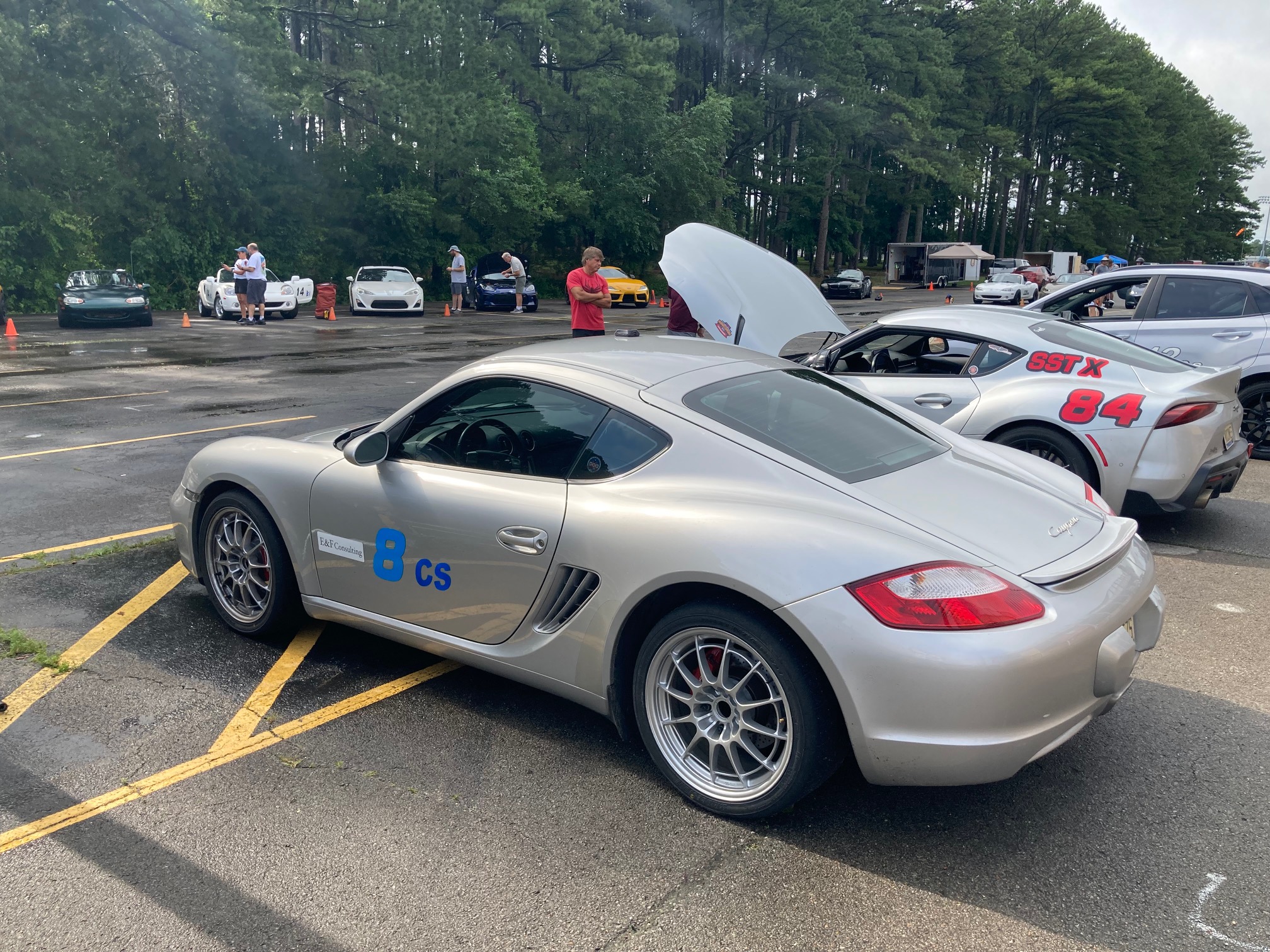
The runs were encouraging. Immediately before these events I installed the Tarett 5-hole front anti-roll bar and a new set of bumpstops one full-step up in durometer from the last event.
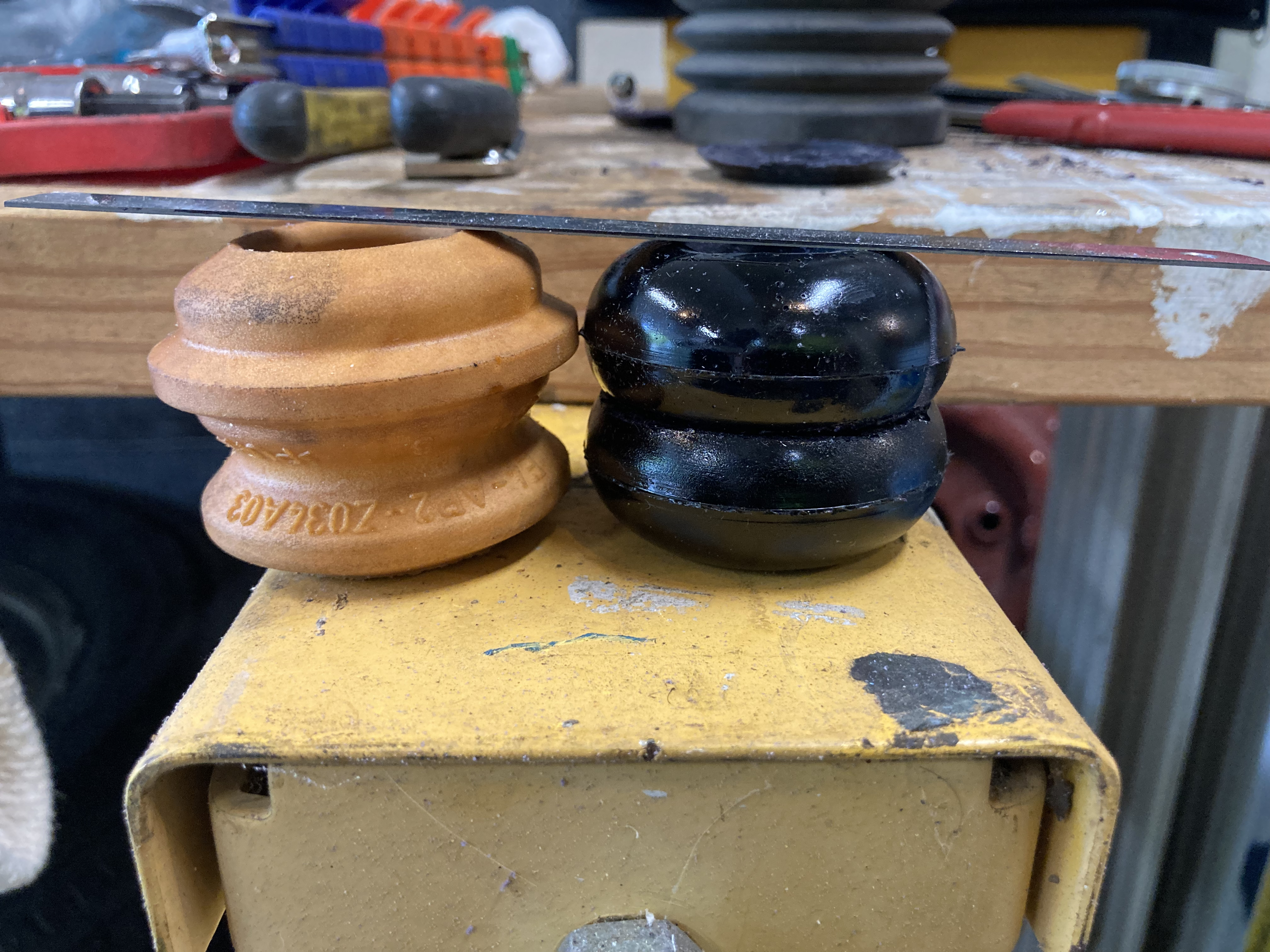
The car was definitely stiffer in roll and a little more bouncy than last time. The stock struts are really not up to the job with these high spring rates, but the car is still controllable, to my great surprise. I calculate the present natural frequencies at 2.10Hz front and 2.45Hz rear. I made a wild guess and set the front bar to the middle hole, planning to adjust it in between events if necessary.
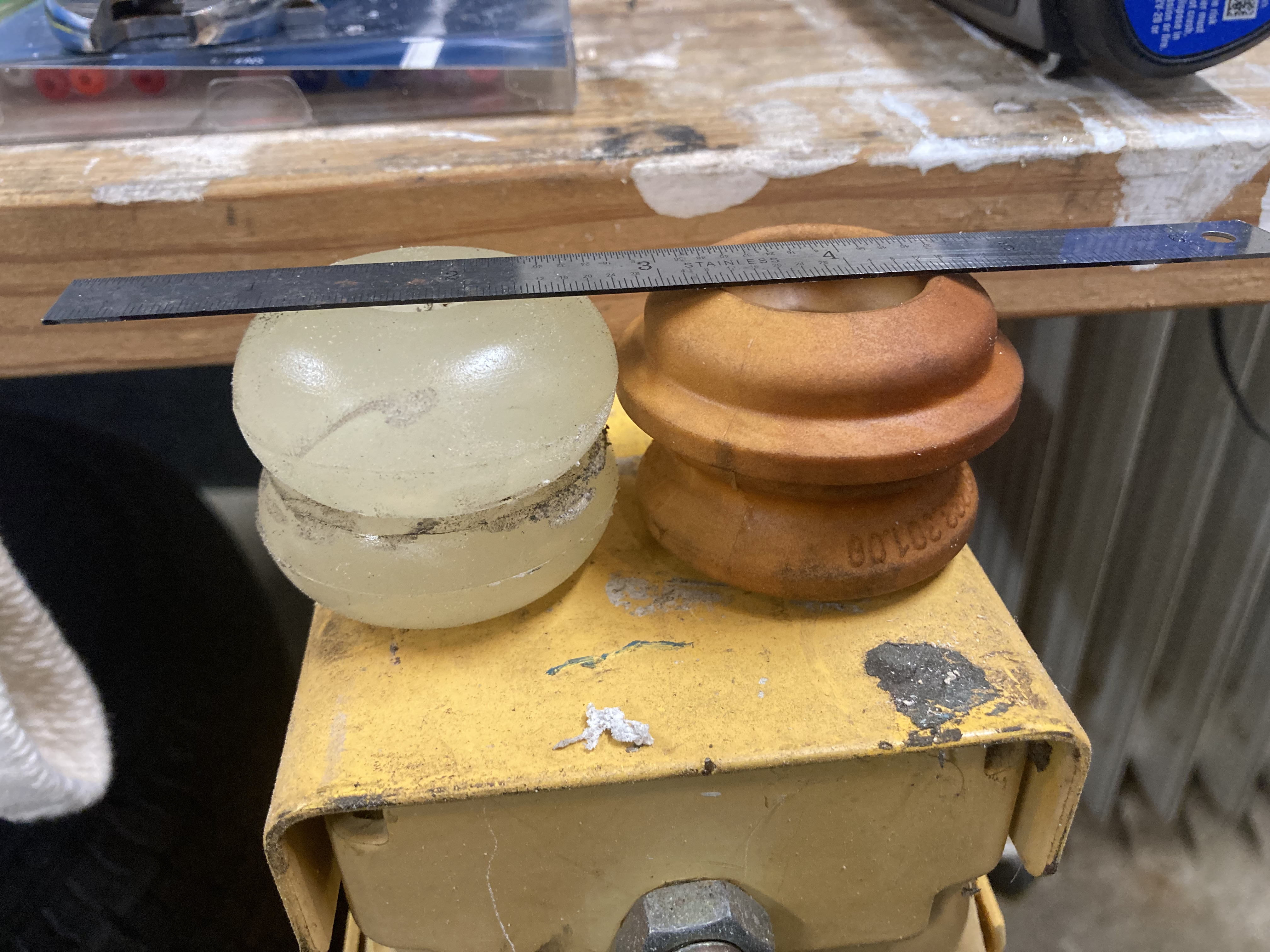
I’m carrying a front spring rate of 505lb/in, which is 155 from the metal spring and 350 from the bumpstop. The rear is 745lb/in, 228 from the metal spring and 517 from the bumpstop. However, there is some uncertainty in these numbers. (For comparison, KW Clubsport coil-over springs are 400F/685R. They also have bumpstops that look pretty tall, but I have no idea what their rate is.) Note: when people normally talk about Porsche spring rates they rarely add the stock auxiliary springs (bumpstops) into the mix. When an aftermarket setup eliminates the bumpstop contribution and compares their new spring to the stock spring the result may be a misleading comparison.
I had also maxed out the rear camber and reset the rear toe to zero. I’m sure the thrust angle is wonky, but I’ll get that taken care of at an alignment shop soon.
How it Drove
The car was well-balanced in both wet and dry conditions with big grip as before. It’s very encouraging that the balance didn’t change noticeably from a wet corner to a (sort of) dry corner. In spite of the difficult wet/dry/wet conditions as rain showers came through I never spun and never hit a cone. I went off-course once when the car hydroplaned straight through a deep puddle when I needed to be turning. External observers stated that the car seemed to have only very minimal roll in the corners. I think I may have been approaching the speed of the Miatas in the slaloms as I learned to trust the car and ask more of it. I hope to get some Miata data to compare to. Transient response seems very good, but not sure if it’s at Miata level.
Results
Day 1 was mostly very wet, so I didn’t expect to make much of dent in the swarm of Miatas. I managed 4th of 13 in C-Street and 8th overall of 110. I was closer to the fast guys in CS in the wet than I expected. My previous experience is that a big weight difference is next to impossible to overcome in the wet, even if the amount of tire is proportional. 600lb is a big weight difference.
Day 2 we got drying conditions for our final 4 runs. I had been in the lead of CS all day, both for Day 2 and the two days combined, partly because of others’ cone trouble. In his last run of seven one of the drivers ahead of me on day one got close enough to take first for the 2-day total by 0.007s.
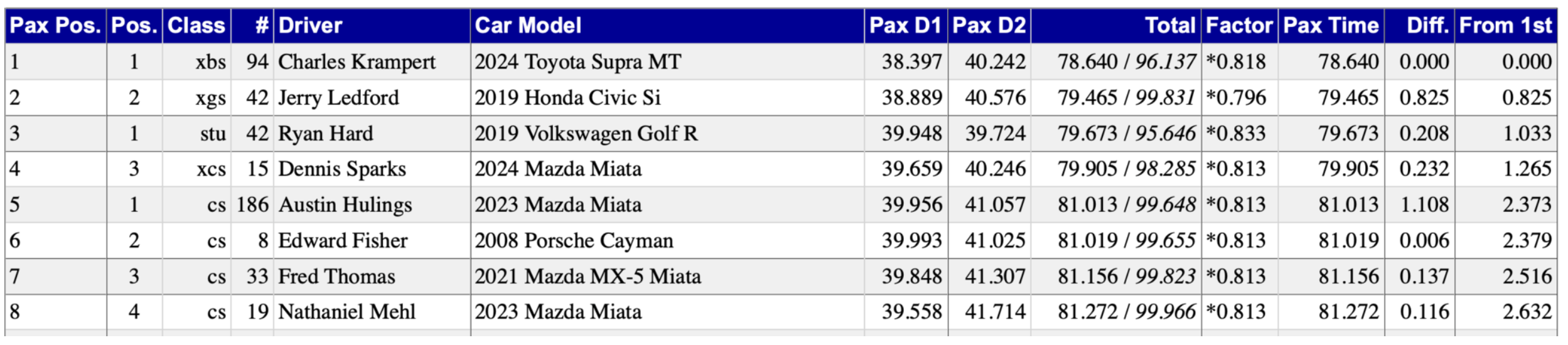
So, I ended with the fastest time in C-Street on day 2 and taking 2nd for the two days combined. Over the two days I was 6th overall. Six of the top 10 overall were C-Street drivers, with 2016 D-Street national champion Dennis Sparks leading the way in Pro class in his 2024 Miata in 4th. I’d been pretty close with him both days until he threw down on his last run and jumped ahead by a second. Dennis trophied in CS at 2022 Nats. He told me he thought it was great that I had developed an alternative to the Miata for CS. The top 8 overall positions for the two days combined are shown below. Each of the drivers in positions five through eight have now placed first in C-Street in an event this year. Note that those four were within 0.269s over two days of driving, fastest times for each day added.
Plans
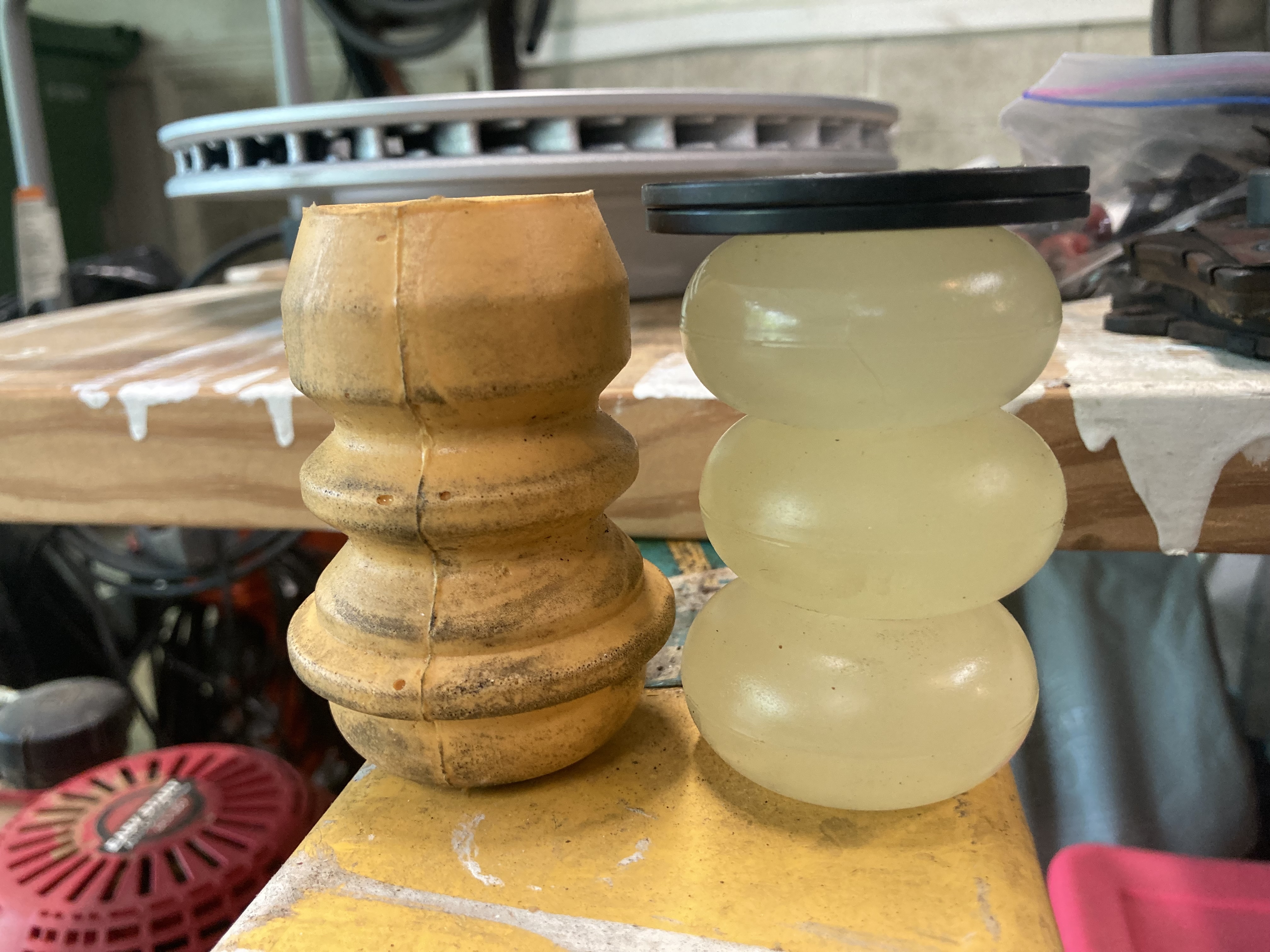
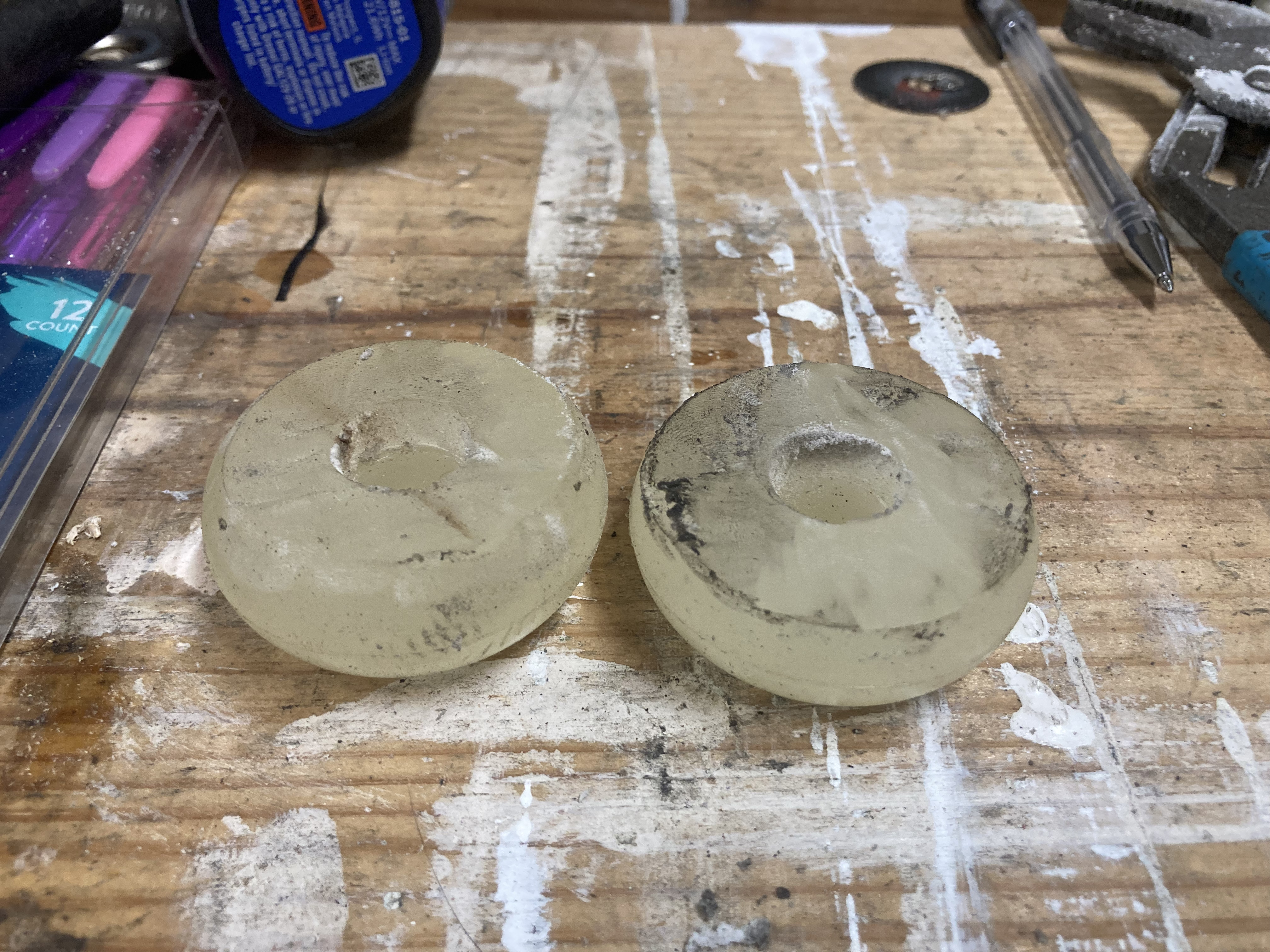
Except for the alignment I have no plans to change the car before the upcoming Bristol Pro-Solo and Tour events, other than some maintenance items. Instead, I’ll be working on the driver in two local events before Bristol. In the meantime I’ll be trying to figure out how to proceed with the too-long Bilstein B6’s. As mentioned in the previous post on this topic, the front struts are too long when fully extended as compared to the stock struts. I have a friend that can turn down the standard bumpstops I’ve been using so that they will fit inside the B6 lower housings. That means buying some examples and testing them after machining to determine the real spring rates. But the big thing is to either find a substitute shorter shock shaft, get the shafts shortened and re-threaded or have a spacer installed interior to the front struts to make them legal.
 Saving Time - An Autocrosser's Blog