Autocross Season Prep- Assembly Complete

Big progress this weekend. First thing I did was remove the tow hitch… 15.5 lbs of steel that won’t be needed as I plan to drive on the race tires or tow to all future events. Anyone need a tire trailer?

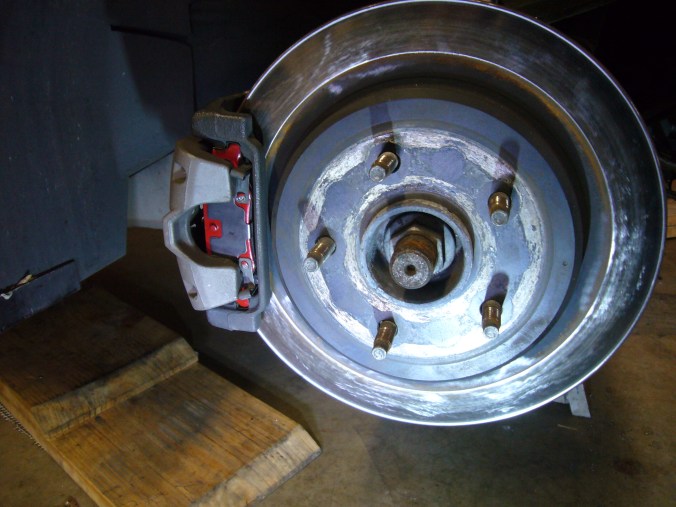
Here’s a sanded rear disk, with Carbotech pad installed:
L1030772

Red Carbotech Pads Installed- Sanded Brake Disk

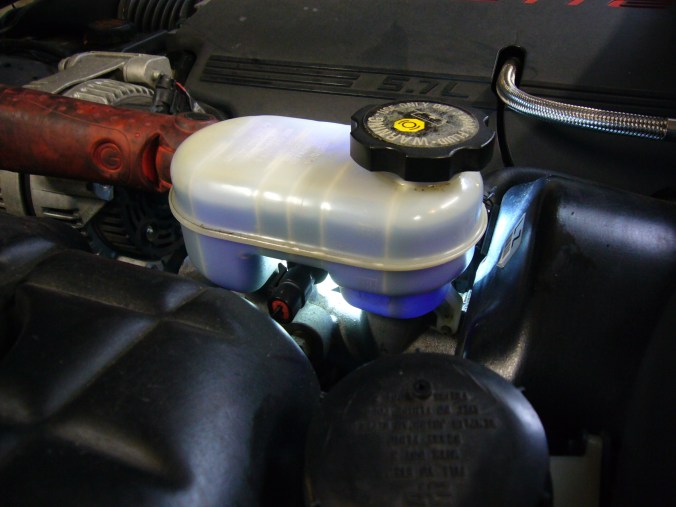
Flushed out the Motul 600 brake fluid installed for the last track day and pushed in some fresh ATE Super Blue Racing fluid. Love that color!
L1030776

ATE Super Blue Racing Brake Fluid

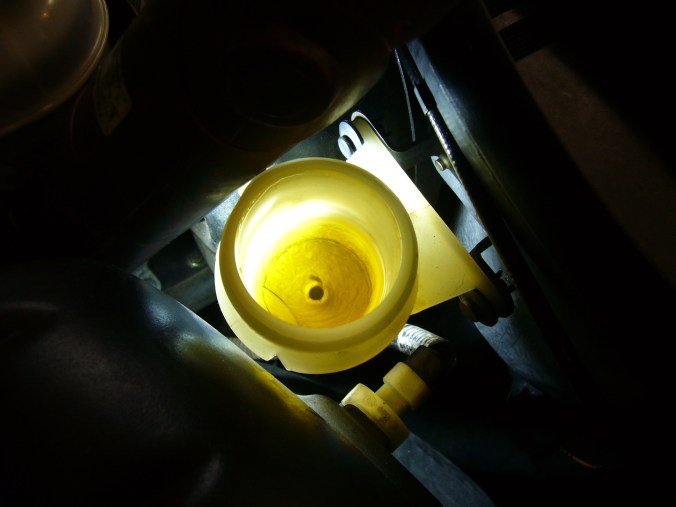
As most 5th generation Corvette owners know, you’ve got to regularly suck the clutch fluid from the reservoir with a turkey baster and replace it. It gets dirty from clutch wear material and eventually causes a sticking clutch pedal. In the pic below, you can see thru the new golden Motul 600 fluid to the bottom. (The reservoir is full to the mark.) It won’t be long before it’s so dirty you can’t see below the surface.
L1030778

Clutch Fluid Reservoir

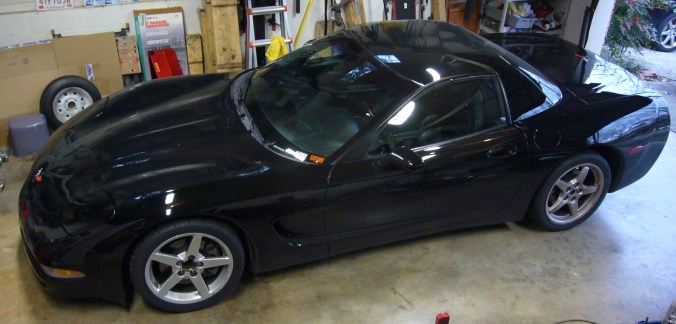
Here she sits after the test drive and initial brake pad bedding. Now she’s ready to start tuning the handling.
L1030780

Ready To Go- Mismatched Wheels and All

Upcoming this weekend is two days of Test & Tune in Birmingham at Hoover Met Stadium, site of the Iron City Showdown Match Tour later in the Summer. The weekend after is our TAC/TVR-SCCA Test & Tune at Milton Frank Stadium in Huntsville, my local autocross site, and the following Saturday is our TAC Driving School with a practice autocross on Sunday, also at MFS. Then I plan to go to Knoxville for ETR-SCCA’s first points event on Sunday, March 13th. Four weekends in a row leading up to Dixie Tour March 18 -20… should be enough to shake off the rust and hopefully get the car handling the way I imagine it can.

Eight drivers in three different car types have registered in B-Street for Dixie Tour as of this moment. I know six of the other seven personally and they can all be fast. The seventh I haven’t met, but with his track record he might very well be the one to beat!

2016 Plan: Amended

I think I got something wrong in the last post.

I said “However, the sway bar, unlike the springs, acts across the car to create an increase in the total weight transferred from the inside to the outside, which tends to decrease total lateral G capability.”

Did you agree or disagree?

Some people have definitely thought this in the past. They (and I) may have been misinterpreting such statements as this, from Carroll Smith, in Tune To Win, page 38: “…the stiffness of the anti-roll bar  will both decrease roll angle and increase lateral load transfer.”

We’ve got to be careful with that statement.

The sprung mass rolls. If there is no sway bar, the inside spring extends, reducing weight on the inside tire. The outside spring compresses, increasing weight on that tire. If you could put a scale under each wheel you will measure what looks like a “weight transfer”, but it’s not, really. It’s a differential in forces at the tires and it will disappear once the car stops cornering. The amount of force differential is controlled by the mass, the lateral acceleration, the track distance and the moment arm which is the distance from the CG to the roll center. The amount of roll doesn’t matter. The stiffness of the spring doesn’t matter. The existence of a sway bar doesn’t matter.

If there is a sway bar, some of the roll energy goes into it instead of the springs. The roll is reduced, but that energy creates another force differential at the tires. The sum of the spring differential forces and the roll bar differential forces exactly equals the previous   amount with springs alone.

So, there is no negative effect on maximum cornering force due to using a stiff roll bar. There is no increase in the total amount of weight transfer, or what I call force differential.

But, during the transient, that is, during turn-in while the lateral-Gs are rising, roll stiffness from springs and bars is a good thing because it makes things happen faster. Energy absorbed by the shocks is a good thing as the effect is to (temporarily) increase roll stiffness and make things happen even faster. The force differential at the tires is going to do what it’s going to do, which is to decrease the maximum lateral-G capability due to the shape of the tire load sensitivity curve. Not much I can do about that in Street class other than set up the car as low as possible. Or, go on a diet and get a lighter helmet!