2nd Place @ Dixie Tour

The whole direction of this year’s setup was to do well at Dixie Tour. I’m happy with 2nd place, my first trophy ever at this event.

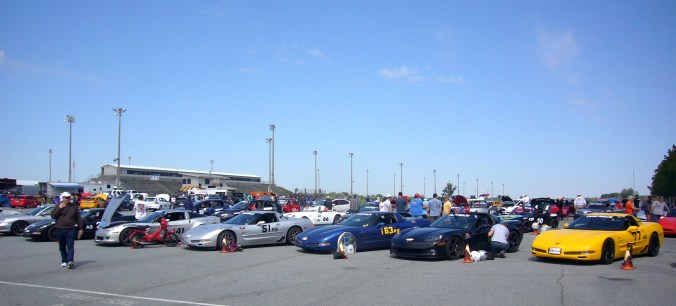
Here’s the grid for run group 4, the A-Street cars making up the front row:

RG4 Grid Dixie 2016

Dixie Tour Grid- Group 4

Backing up a little bit: I had to increase the rear tire toe-in up to last year’s numbers (about .28 degrees per wheel) rather than the smaller value I tried. I could not get enough back-end stability with a lessor amount of toe-in. This doesn’t bode well for rear tire wear, given that I’m driving to all events.

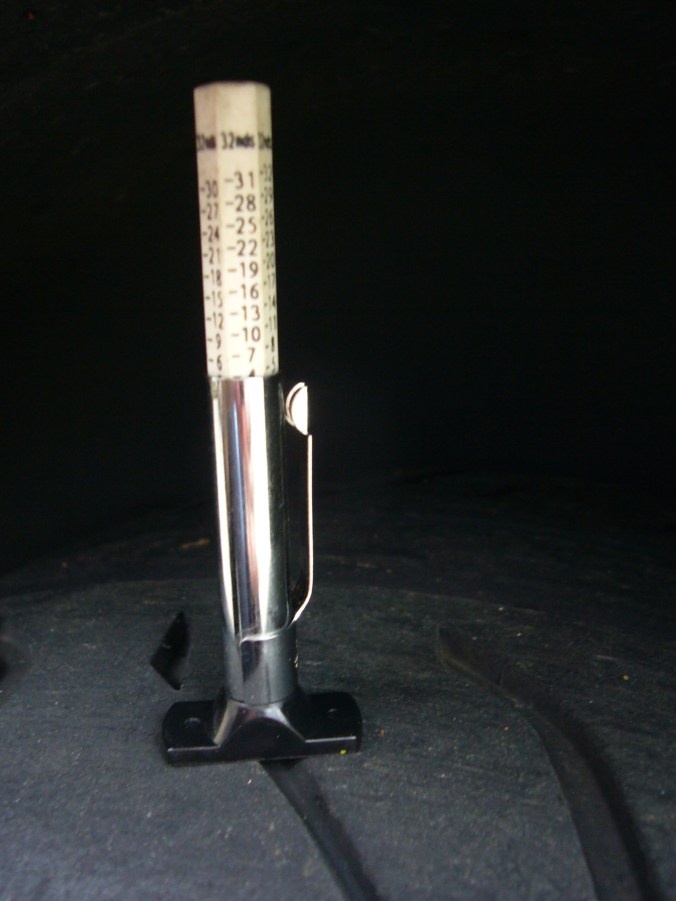
In fact, after 51 runs and about 2,000 miles on the road the rear tread-depth is down to 4/32nds about halfway to the edge from the center. The center measures 6/32nds. (Molded depth is 7.4/32nds.) The fronts measure 6/32nds everywhere. (I travel with zero toe in the front.) I think it’s clear that I need to really increase the pressure during event transits to try get the center to wear faster than the edges. I might think about adjusting rear toe like I do the fronts for the road as well. This wear is crazy fast, but then I only got about 85 runs last year on these tires before they had heat-cycled out of their initial stickiness and were no better than the previous generation of tires.

rear tire 51 runs

4/32n’ds Tread Depth Remain

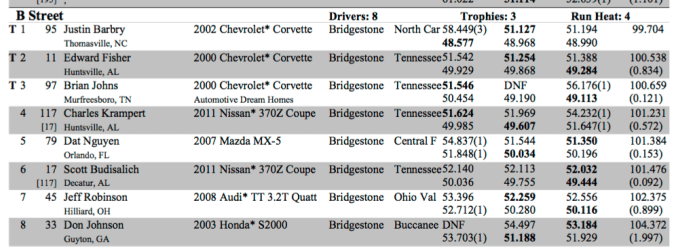
The courses were more open this year and top speeds were faster. In previous years my top speed would be high 50’s… 57mph to 59 mph. This year the data for Day 1 says 62.5mph and Day 2 68.5mph. So, my focus on transient response turns out to have been a little bit misplaced, perhaps. In any case, I was in 2nd at the end of Day 1 and managed to hold on to finish 2nd of eight entrants. Here are the final results:

BS Dixie

B-Street Dixie Tour Results

The three trophy spots were occupied by Corvettes, partly because there was no top driver in an S2000 at the event this year and maybe also because the new generation of tires were not shipping yet this time last year in Corvette sizes. The new generation puts power down better, giving an advantage to the high-power Corvettes. Interestingly, 4th place was taken by a fellow driver from Tennessee Valley Region in a 370Z. Fifth was Dat Nguyen in his Miata MSR. That same car and driver had been 3rd last year and Dat has not gotten slower!


The big news for B-Street, at least in the Southeast, is the new blood coming in. First place was taken by Justin Barbry, who trophied in the 3rd spot in FSP at Nationals last year. His first run on Day 2 really blew away the class. In third place was Brian Johns who was E-Stock National Champion in 2007 and has many Nationals trophies in SSM to his name. So, the bar has been set high in B-Street this year in the Southeast and these guys are just getting to know their cars. We’ll have to see what happens around the rest of the country.

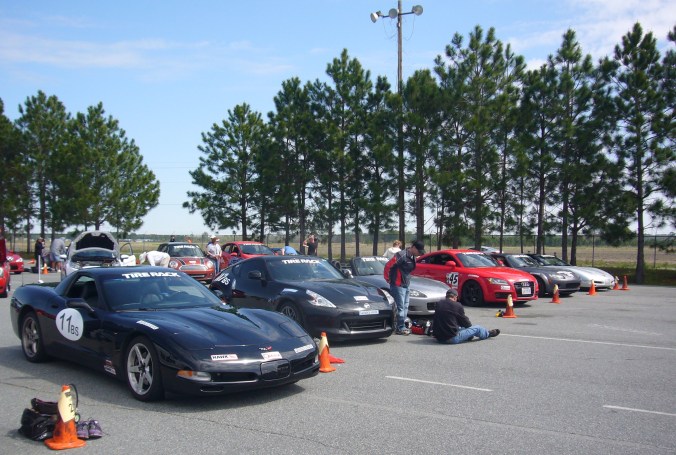
BS lineup Dixie 2016.JPG

B-Street Lineup at Dixie Tour


First T&T: This thing feels good!

Just back from two days of testing & tuning down in Birmingham at the Hoover Met(ropolitan Stadium) parking lot. What a great site- big with very good, very grippy asphalt. As usual, the ALSCCA folks were very welcoming and did great job. The Iron City Match Tour scheduled for June 17-19 should be a fantastic event. Be sure to put it on your calendar.

But, before I get to how the car handled, let me catch you up. I borrowed a set of corner weight scales from a friend (Thanks Tom!) and got another friend (thanks Glenn!) to help me do the corner weighting. The empty car weighed 3043 lbs on 3/16 of a tank and the cross weights were way off somewhere near Saturn… around 1.5% out. We got it close to 50% but I’d only disconnected the rear roll bar, not the front. I felt like I was fighting the front bar, so I knew we’d have to do it again.

The next morning Clem Tire aligned the car. They found that last years’ home alignment was good, but the big thing I had them do was reduce the toe-in in the rear. Up until now I’d wanted a very stable car so I ran 0.28 degrees of rear toe-in per tire which is 1/4″ total. This year I had them reduce it to 0.22 degrees per tire, which is right at 3/16″ total. Not a lot of difference, I grant you, but along with some other changes I was hoping to get a little more slithering from the back end this year. When a well-driven Corvette slithers like a big lizard through a slalom it looks from the rear like the car is bending in the middle around each cone.

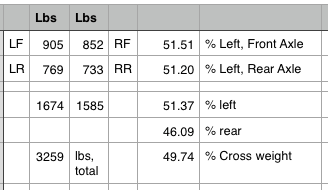
That night Glenn and I measured the corner weights with both roll bars disconnected. We had to crank up the left-rear corner even more to get close to 50%. Here are the results, with driver and helmet in the car and 3/16 of a tank of gas:
Cross

Corvette Corner Weights After Adjustment

What does 50% cross weight mean, you may ask? For one thing, it doesn’t mean that there is equal weight on each tire. The values in the chart show that clearly and the % left and % rear numbers tell you what the static weight distribution is. Cross weight is something different.

What 50% cross actually means is that the differential left to right is equal front and back. (It’s calculated by adding the right-front weight to the left-rear weight and dividing by the total weight.) So, if the left-front has 51% of the front axle weight, then the left-rear will also have 51% of the rear axle weight when the cross weight is 50%. Per the numbers above the car actually has 51.5% on the left-front and 51.2% on the left-rear. So, the cross isn’t perfect (49.74%) but it’s less than 0.5% from 50, which is usually the target.

Why is cross weight percentage important? It helps make the handling of the car symmetrical. That is, it will have the same characteristics turning left as turning right. Equal cross can’t do this all by itself, however. Remember I said my car has more weight on the left side than the right with the driver in place? Most production cars are that way. And this condition will forever affect the handling. (Not to mention the 54% that’s on the front axle!)

How do you adjust the corner weights to get 50% cross? Well, in Street class, there’s only one way: adjust the ride height at a corner. (We can’t rearrange components.) Not all cars have such an adjustment from the factory. Luckily, the Corvette has an adjustment bolt at each corner. What I’ve done is set both fronts low and equal. Then, I adjust the rears. The right-rear was already as low as it would go and the left-rear about in the middle. So, I had to crank up the left-rear, physically lifting that corner of the car. Doing this also sends weight to the diagonally opposite corner, the right-front, and removes weight from the other two corners. Think of your car like a 4-legged table. If you shim up one leg, it teeters on that one and the diagonal. With a sprung suspension it’s not all or nothing like it is with the rigid legs of a table, so even a little air pressure difference in the tires has an effect. Set your pressures before you measure the corner weights!

Lifting the right front would have the same effect on the cross, and maybe I should have. I’ll have to think about that and what difference it might make. I had a specific reason for making all the adjustment at the rear. Raising the rear of a corvette increases the roll stiffness at the back, promoting more of that slithering talked about earlier.

So, now the car is aligned with healthy front toe-out set at the event, cross-weight balanced, shocks set stiff, more air pressure than last year, a narrower (better supported) front tire than last year… wow, it drove good!

I couldn’t believe the turn-in rate! I was early on every corner for the first three runs. The back end was wagging left and right way too much, but once I slowed the input to the steering wheel, it all came together for top PAX time for the day.

The car is definitely better in transition, slithering through the slalom the way a Corvette should. It is less stable but more fun to drive and more than one person commented to me how good the car looked on-course. I can’t tell if any peak lateral G has been lost… the site and courses didn’t allow me to figure that out, but I’m not worried. I’ve achieved what I set out to do, which was to improve transient response. If I can’t do well at Dixie Tour a month from now it won’t be the fault of the car.

With all the runs today (day 2 of the Test & Tune had very few cars) I was able to play with tire pressures and figure out the sweet spots. Minus 4 psi from baseline in the front didn’t seem to reduce peak grip, but it definitely slowed the transitions. Plus 4 psi in the front reduced front grip and induced understeer. Plus or minus 2 psi around the baseline in the front and I can’t tell the difference.

In the rear, minus 2.5 psi from the baseline was a disaster… totally uncontrollable at the 1-2 shift! Plus 2 psi and I could feel some loss of grip. So, I think I have a +/- 1 psi band figured out for the rear. Of course, this is all for one surface, on one particular day, without changing shock settings, but it gives confidence in the starting point to use in the next events leading up to Dixie Tour.


Autocross Season Prep- Assembly Complete

Big progress this weekend. First thing I did was remove the tow hitch… 15.5 lbs of steel that won’t be needed as I plan to drive on the race tires or tow to all future events. Anyone need a tire trailer?

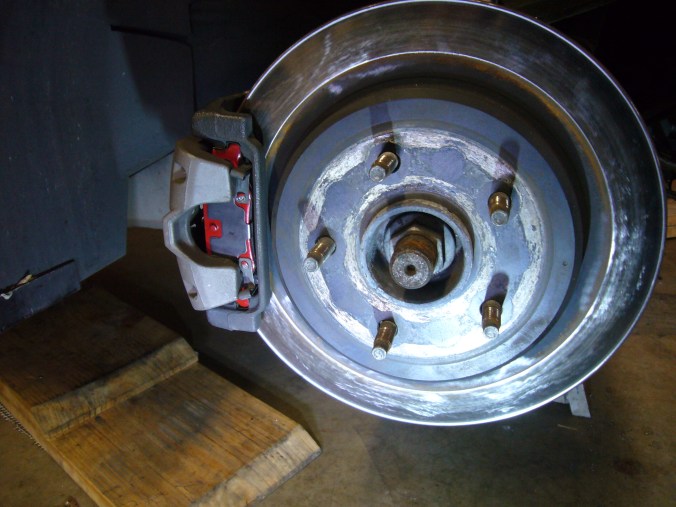
Here’s a sanded rear disk, with Carbotech pad installed:

L1030772

Red Carbotech Pads Installed- Sanded Brake Disk

Flushed out the Motul 600 brake fluid installed for the last track day and pushed in some fresh ATE Super Blue Racing fluid. Love that color!

L1030776

ATE Super Blue Racing Brake Fluid

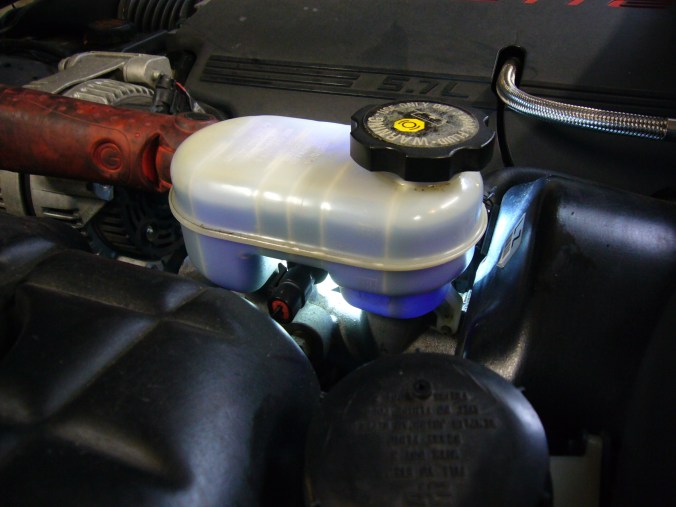
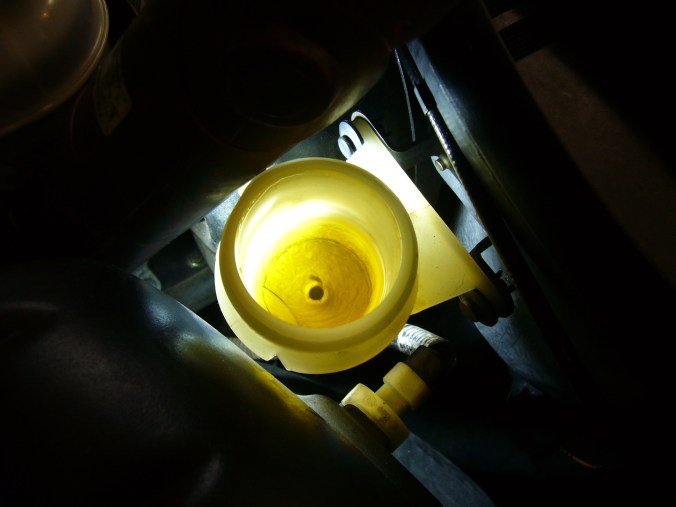
As most 5th generation Corvette owners know, you’ve got to regularly suck the clutch fluid from the reservoir with a turkey baster and replace it. It gets dirty from clutch wear material and eventually causes a sticking clutch pedal. In the pic below, you can see thru the new golden Motul 600 fluid to the bottom. (The reservoir is full to the mark.) It won’t be long before it’s so dirty you can’t see below the surface.

L1030778

Clutch Fluid Reservoir

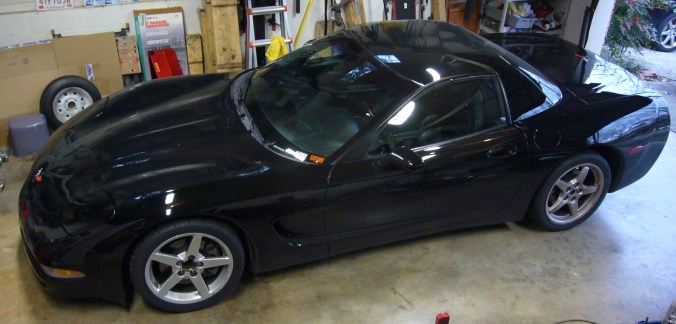
Here she sits after the test drive and initial brake pad bedding. Now she’s ready to start tuning the handling.

L1030780

Ready To Go- Mismatched Wheels and All

Upcoming this weekend is two days of Test & Tune in Birmingham at Hoover Met Stadium, site of the Iron City Showdown Match Tour later in the Summer. The weekend after is our TAC/TVR-SCCA Test & Tune at Milton Frank Stadium in Huntsville, my local autocross site, and the following Saturday is our TAC Driving School with a practice autocross on Sunday, also at MFS. Then I plan to go to Knoxville for ETR-SCCA’s first points event on Sunday, March 13th. Four weekends in a row leading up to Dixie Tour March 18 -20… should be enough to shake off the rust and hopefully get the car handling the way I imagine it can.

Eight drivers in three different car types have registered in B-Street for Dixie Tour as of this moment. I know six of the other seven personally and they can all be fast. The seventh I haven’t met, but with his track record he might very well be the one to beat!

Autocross Season Prep Gets Started

Prep for the 2016 autocross season started this weekend. A few pictures to show the plans and progress.

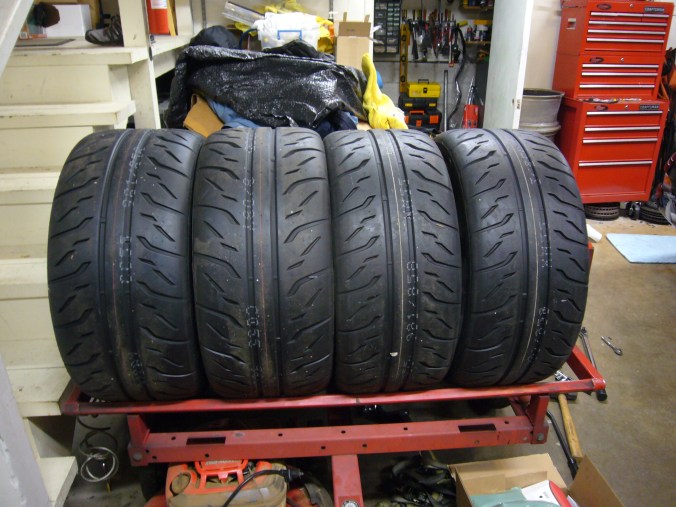
First up, new rubber: RE71Rs in 265/275-18. They’re so clean and sticky if it was summer they’d catch flies.

L1030768

New Bridgestones

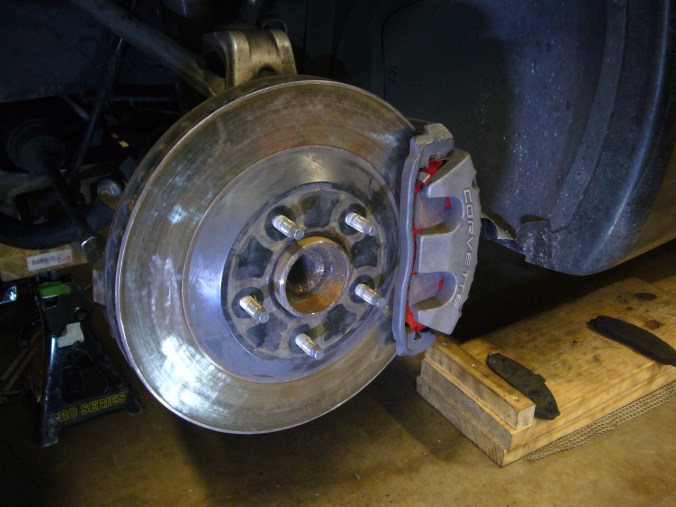
All disks have been sanded, ready for bedding-in new pads, Carbotech Bobcats that come painted red. I’ll replace the brake fluid as well.

L1030760

Sanded Brake Disk with New Pads in the Caliper

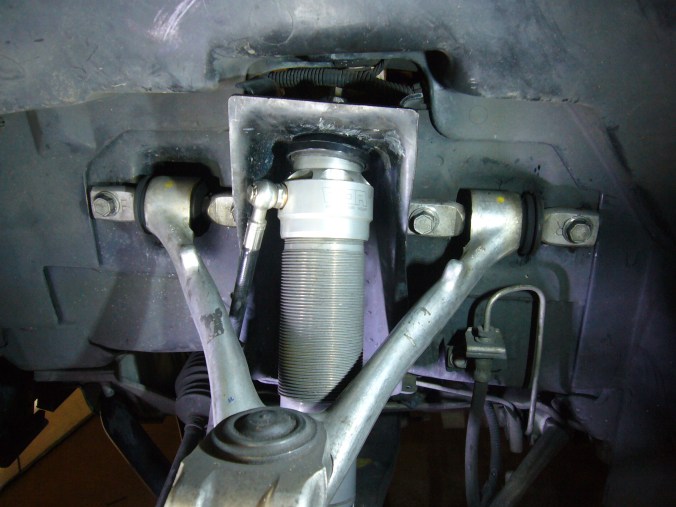
The Pfadt/Ohlins shocks are reinstalled. No changes since RE Suspension worked on them last year. I’ve routed the line to the remote reservoirs a little differently than last year to better keep it away from any sharp edges. The upper right A-arm bushing has migrated a tad, but it should be good for another year.

L1030762

Pfadt/Ohlins Shock Rebuilt by RE Suspension

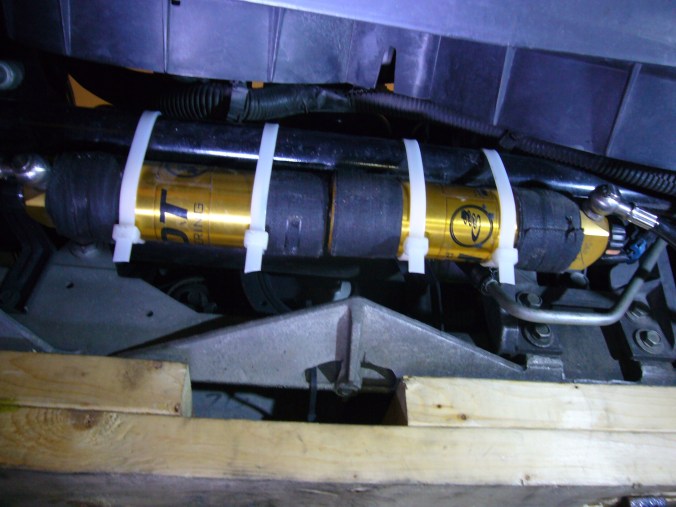
The shock remotes are again strapped to the front roll bar, but reversed in orientation from last year. If I lay down in front of the car I can just reach them to turn the adjuster knobs.

L1030767

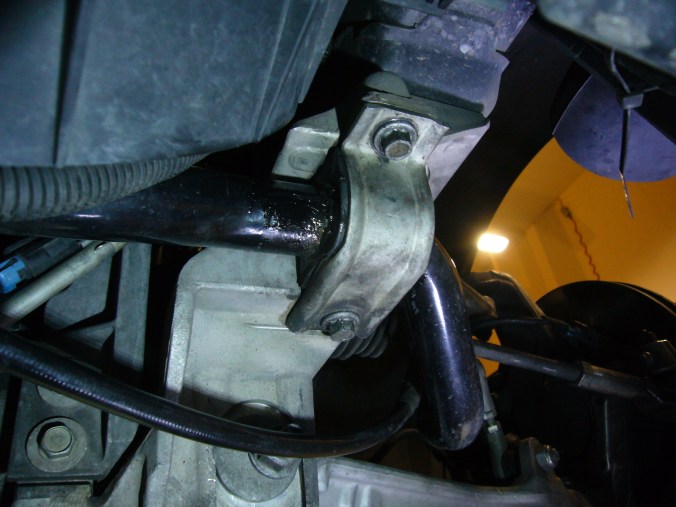
Most modern roll bar bushings don’t really need any lubrication, but to reduce friction to a minimum I cleaned and lubed them with Energy Suspension super-sticky grease intended for polyurethane bushings. I noticed that the inner surface of the bushings have circumferential ridges that seem like they will hold some grease in place quite well. I don’t think this stuff will wash out.

L1030765

Cleaned & Lubed Roll Bar Bushing

After the rears are finished, I’ll get the car aligned and corner balanced. Then, I’ll disassemble the driver’s seat again and figure out what’s broken in it this time.


2016 Plan: Amended

I think I got something wrong in the last post.

I said “However, the sway bar, unlike the springs, acts across the car to create an increase in the total weight transferred from the inside to the outside, which tends to decrease total lateral G capability.”

Did you agree or disagree?

Some people have definitely thought this in the past. They (and I) may have been misinterpreting such statements as this, from Carroll Smith, in Tune To Win, page 38: “…the stiffness of the anti-roll bar  will both decrease roll angle and increase lateral load transfer.”

We’ve got to be careful with that statement.

The sprung mass rolls. If there is no sway bar, the inside spring extends, reducing weight on the inside tire. The outside spring compresses, increasing weight on that tire. If you could put a scale under each wheel you will measure what looks like a “weight transfer”, but it’s not, really. It’s a differential in forces at the tires and it will disappear once the car stops cornering. The amount of force differential is controlled by the mass, the lateral acceleration, the track distance and the moment arm which is the distance from the CG to the roll center. The amount of roll doesn’t matter. The stiffness of the spring doesn’t matter. The existence of a sway bar doesn’t matter.

If there is a sway bar, some of the roll energy goes into it instead of the springs. The roll is reduced, but that energy creates another force differential at the tires. The sum of the spring differential forces and the roll bar differential forces exactly equals the previous   amount with springs alone.

So, there is no negative effect on maximum cornering force due to using a stiff roll bar. There is no increase in the total amount of weight transfer, or what I call force differential.

But, during the transient, that is, during turn-in while the lateral-Gs are rising, roll stiffness from springs and bars is a good thing because it makes things happen faster. Energy absorbed by the shocks is a good thing as the effect is to (temporarily) increase roll stiffness and make things happen even faster. The force differential at the tires is going to do what it’s going to do, which is to decrease the maximum lateral-G capability due to the shape of the tire load sensitivity curve. Not much I can do about that in Street class other than set up the car as low as possible. Or, go on a diet and get a lighter helmet!